Welcome Guest

SHOP BY CATEGORY
SHOP BY BRAND
SHOP BY VEHICLE


FREE SHIPPING on Orders Over $99*?


Shop Top Categories






Deals of the Week


Best Sellers


New Products


Popular Brands


Shop Popular Vehicles


Tips for buying
truck & jeep parts

Truck Parts & Accessories
4 Wheel Parts carries a vast selection of truck parts at discount prices. Browse our online truck parts catalog when you know what your truck needs, or when you’re looking for inspiration — and do it knowing you’ll get a great deal. All of our products are covered by our 100% price match guarantee. You also have your choice of shipping options, including free shipping if you pick up your order in one of our stores. This saves you a bundle when you’re buying large truck parts, such as a truck bed cover or crate engine.

Best Aftermarket Parts for Trucks
Get the most out of your truck with our large inventory of performance parts and equipment. 4 Wheel Parts carries programmers and tuners, like the EvoHT programmer, along with fuel preporators from AirDog. Keep it cool under the hood and warm in the cab with heating and cooling accessories from the top brands in the industry. For peak performance on the road and off of it, we carry a wide selection of air intake systems, accessories, and assorted green truck parts for safe and environmentally friendly applications.

Jeep Parts
4 Wheel Parts has the Jeep parts you need! Are you eyeing a new computer chip or exhaust system to give your Jeep a little more muscle? Or, are you knee-deep in a ground-up rebuild? For any Jeep build you undertake, 4 Wheel Parts has you covered. Find the right parts in our extensive Jeep parts catalog, and then order them online, over the phone, or in our stores. You can also choose from several shipping options. If you live near one of our stores, keep your shipping costs low by picking up your order in the store.

Jeep Accessories
4 Wheel Parts has the Jeep parts you need! Are you eyeing a new computer chip or exhaust system to give your Jeep a little more muscle? Or, are you knee-deep in a ground-up rebuild? For any Jeep build you undertake, 4 Wheel Parts has you covered. Find the right parts in our extensive Jeep parts catalog, and then order them online, over the phone, or in our stores. You can also choose from several shipping options. If you live near one of our stores, keep your shipping costs low by picking up your order in the store.

Jeep Lifestyle & Clothing
In addition to Jeep parts and accessories, customers will find a variety of Jeep clothing/apparel, and other Jeep-related products on 4WD.com. Choose from Jeep shirts, hats, caps, beanies, and trinkets such as Jeep license plates, DVDs, key chains, and more. These make great gifts for relatives and friends who are passionate about Jeeps. Jeepers will find what they’re looking for in our Jeep Lifestyle and Apparel section. For birthdays or the holiday season, Jeep gifts are perfect for passionate off-road enthusiasts.

Exterior Jeep Parts
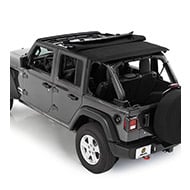
We supply the ultimate collection of Jeep tops. Our inventory includes the emergency Jeep soft top, the Koolshade full brief top, the Koolbreez brief top, and the Breezer top. The soft top fits vehicle models from 1953 to 2012, and provides protection from sudden downpours for you and your passengers. The Koolshade full brief top will not flap or balloon in the breeze. The Koolbreez top lets you use straps and footman-loops attached to the rear of the vehicle. The Breezer top is constructed from durable black mesh material. Jeep isn’t just a brand for off-roaders, it’s a way of life.

Wheels
Wheels make an immediate statement about who you are and how you drive. A set of steel wheels says that you are a no-nonsense driver who likes to keep things simple. One-piece cast alloy wheels are a popular solution for off-roaders because they are a good value. However, drivers who want the best choose one-piece forged wheels. Light and strong, one-piece forged wheels can take abuse and keep you rolling. Whatever your taste and driving habits, 4 Wheel Parts has the right set of wheels for your truck.

Black Steel Wheels
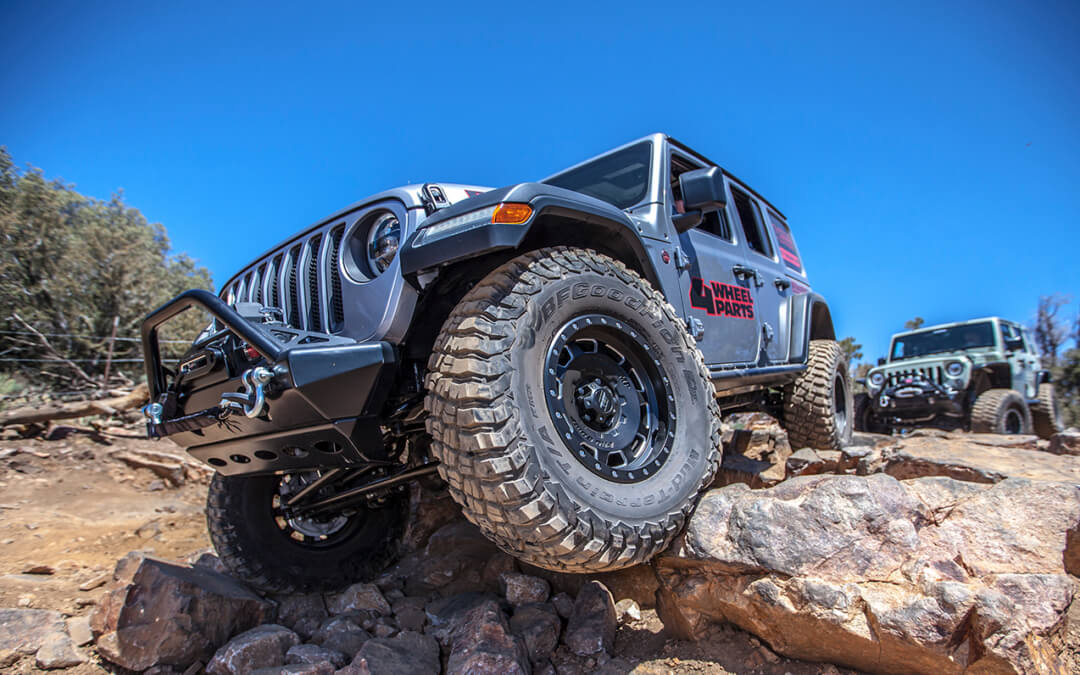
Many off roaders prefer the bold look of black steel wheels. They have a tough, no-nonsense appeal that fits nicely on rigs built for tackling serious terrain. Pro Comp Rock Crawler Series 98 Flat Black Monster Mods are the prototypical black steel wheels — simple in style and durable in construction, these wheels look great on any off-road vehicle.

Truck and Jeep Wheel Brands
4 Wheel Parts carries a wide selection of truck and Jeep wheels from the top manufacturers. Mickey Thompson wheels come in an array of specialty sizes to fit most off-road racing applications. 4 Wheel Parts also carries wheels from XD Wheels, KMC, Pro Comp, and Fuel Wheels. Our inventory has the hottest styles of off-road wheels at the most affordable prices for your truck, Jeep, or SUV.

4x4 Wheels
It may be easier to pick 4x4 wheels based on looks alone, but it’s not wiser. Your wheels, like your tires, take serious abuse when you venture off the pavement. So it’s important to know what materials are available and how they impact your off road performance. You can group 4x4 wheels into two main categories: those made from steel and those made from cast aluminum alloy. Steel 4x4 wheels are heavier and more durable, but prone to rust. Cast alloy truck wheels tend to keep your brakes cooler and resist rust, but they’re more expensive than their steel counterparts.

4x4 Accessories
The modification work of a true off-roader is never done. As long as you keep driving, you’ll need more 4x4 accessories. Suspension, steering parts, drivetrain components, tools, body armor, nerf bars, bug shields — the list goes on and on. Find the 4x4 accessories you need, at the prices you like, with 4 Wheel Parts.

Dana 44 Rear Axle Parts
The Dana 44 rear axle has been a mainstay in the off road community for decades. Off-roaders who don’t have a Dana 44, want one. Off-roaders who do have the Dana 44 need access to the ring and pinion gear kits and differentials that work with it. Either way, 4 Wheel Parts can help. Our catalog includes Dana 44 rear axle assemblies, plus a complete line of drivetrain products compatible with the Dana 44.

Off Road Truck Tires
Off road truck tires raise your truck’s ground clearance so you can manage steeper terrain and bigger obstacles. Depending on the type of off road tire you choose, you’ll see some traction benefits as well. Before buying off road truck tires, make sure you understand how the new tires will impact your gearing and performance and, if you’re going to do some serious off-roading, you may want to invest in some mud flaps. A 4 Wheel Parts service technician can answer your questions about any other modifications required by the installation of new off road truck tires.

Super Swamper 38" Tires
The Super Swamper 38” tire is a popular choice among off road enthusiasts because it withstands the most extreme off road conditions. Roots, sharp rocks, and ruts are no match for Super Swamper sidewalls. And, the aggressive Super Swamper tread design grabs in snow, sand, and mud. The right Super Swamper 38” tire for your ride depends on where you drive. Super Swamper TSL Boggers, for example, are ideal for mud driving, while Super Swamper TSL Thornbirds are a better choice for a daily driver.

4X4 Tires
The right 4x4 tires will provide an immediate improvement in off road traction. A good set of mud terrain 4x4 tires, for example, will bite through the soggy conditions that leave your street tires spinning. Often, the more aggressive the off road tire, the more you’ll give up in ride quality and handling on the street. If you drive your 4x4 to work and on the trail, all terrain tires are probably a better choice.

Truck Lift Kits
Truck lift kits are in high demand, and for good reason. A lifted truck can tow more, clear bigger obstacles, and tackle tougher terrain than a stock-height truck. Lifting a truck also creates room for larger tires, which provide even more ground clearance and improved traction. While these are important improvements to four-wheelers, sometimes the decision to lift a truck comes down to looks. We stock a large collection of lift kits that can transform your truck’s stance from ordinary to imposing. 4 Wheel Parts stocks leveling kits for a variety of applications, including the two-inch rear leveling kit, and the front long-travel leveling kit.

Jeep Lift Kits
Any Jeep owner will tell you, you won’t realize the full potential of your Jeep until you lift it. A lifted Jeep looks tough and drives tougher. Jeep lift kits increase ground clearance and create space for massive, mud-slinging tires. You have your choice of a suspension lift or a body lift; suspension Jeep lift kits tend to be pricier, but they offer better off-road performance. Body lift kits are a good option when you plan on crawling the city streets in your lifted ride.

Detroit Lockers
The Detroit Locker is the most famous and reputable locking differential on the market. It delivers maximum torque to your wheels and keeps them turning — on mud, ice, and rocks. If you can’t get traction with a Detroit Locker, then you need a winch. A rugged favorite among off road racers, the Detroit Locker is available for many applications.

XD Truck & Jeep Rims
XD truck rims by KMC Wheels are race-proven in the most grueling of off road events. Using the Baja 1000 and other extreme events as their testing grounds, KMC engineers designed these one-piece aluminum wheels for durability. They then added to that durability with creative, cutting-edge designs. XD truck rims offer a great value for off road enthusiasts.

Truck Rims & Truck Wheels
There are truck rims for style and truck rims for off road driving. Steel truck wheels have a strength advantage, but they add a lot of weight to your truck. Extra weight is bad for fuel economy and puts more stress on your bearings. Select your truck wheels as carefully as you select your tires. Consider where and how you drive, and what type of abuse your truck wheels will face.

Tonneau Covers & Tonneau Cover Specs
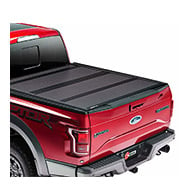
Add a soft or hard cover to your truck and you get a lockable and sealed cargo area, improved gas mileage, and sleek looks. Tonneau covers were created to enhance the looks of motorists’ trucks and vehicle owners’ sense of security. Tonneau covers are reviewed by 4 Wheel Parts’ knowledgeable, experienced technical specialists who have progressive ideas about what works best for the ardent truck driver. The tonneau cover technologists stick to the basics to produce a quality product at all times. Soft tonneau covers are typically made of high-strength, water resistant vinyl. Available designs can be rolled up, folded back, or tilted up to expose the truck bed. Convenience is the primary advantage of a soft tonneau cover. It opens and closes quickly and is easier to store than a hard tonneau cover. Hard tonneau covers can be more durable and secure, however. Some truck drivers prefer the aesthetics of hard tonneau covers as well.

Exterior Truck Parts & Accessories
For motorists who are looking to enhance the protection and cosmetics of their trucks, 4 Wheel Parts offers quality fenders and flares. For armor and protection of the motorists’ trucks, 4 Wheel Parts offers rocker guard gaskets and fender, rear corner, rocker panel, and tailgate sill protectors. The roll cages of 4 Wheel Parts come in complete and fastback models. 4 Wheel Parts’ electric winches offer products that have rated line pulls ranging from 8,000 to 12,000 lbs. Additionally, most of the company’s electric winches come with remote control activated by a remote switch with a 12-foot lead. In addition, the truck exterior parts that 4 Wheel Parts offers are an extensive collection.

Interior Truck Parts and Accessories
The interior commodities and other accessories offered by 4 Wheel Parts are quite varied. The company offers many products that enhance the travelling experiences of motorists with great air conditioning and quality audio and sound systems. Security systems are also offered by 4 Wheel Parts. Some of the merchandise that customers can choose from is: radiators, electric cooling fans, A/C Bracket, Trail Tunes amplified sound system, floor mats, the VDP sound wedges speaker system, TURBOWIRE adapter wires, and a vast collection of security glove boxes. In addition to making any ride comfortable and enjoyable, 4 Wheel Parts offers these products at affordable prices.

ATV Parts and Accessories
4 Wheel Parts carries an enormous collection of ATV accessories and plow kits, including GoPro anti-fog inserts, HD Hero rechargeable Li-lon batteries, car chargers, and the LCD BacPac. The ATV plow kits supplied by 4 Wheel Parts include the WARN ProVantage front-mounted ATV plow base, standard ATV center mount plow system with value 54-inch straight blade, ProVantage ATV front-mount plow system with 54-inch tapered blade, the standard ATV center-mount plow system with value 60-inch straight blade, ATV plow blade marker, and the ATV plow lift rope.

ATV Tires and Wheels
4 Wheel Parts offers top-quality ATV tires and wheels. These ATV tires offer peak performance, rugged durability, and a complementary style. 4 Wheels Parts carries Super Swamper TSL/ATV tires, TSL Vampire ATV tires, GBC Motorsports Sand Shark-II tires, and GBC Afterburn Streetforce tires. Our ATV wheels selection includes the Delta Steel Wheel-Black, the SS212-Black, and the SS112 Sport-Black.
Popular Vehicles
We've put together the following quick links to help you get straight to the parts and accessories home page for your specific vehicle. Starting with some of our most frequented models. The list of all vehicles that we support with custom-fit accessories can be found here.
Jeep Parts
- Jeep Wrangler (JK) Parts
- Jeep Wrangler (LJ) Parts
- Jeep Wrangler (TJ) Parts
- Jeep Wrangler (YJ) Parts
- Jeep Wrangler JL Parts
- Jeep Gladiator Truck Parts
Dodge Parts
Chevy Parts
- Chevy Colorado Parts
- Chevy Silverado 1500 Parts
- Chevy Silverado 2500 Parts
- Chevy Silverado 3500 Parts
Ford Parts
Toyota Parts
Nissan Parts
The Dirt - Articles / 4x4 Resource Center
Whether you just bought your Jeep, hit the trail every weekend, or just want to make your truck more versatile, The Dirt is your resource for building your rig right. We are here to introduce you to the latest parts, get hands on with product reviews, give helpful advice, showcase some amazing builds, and help you get out in the dirt.
Some of Our Latest DIY Tips, Reviews and Builds:
- Product Spotlight: AMP Research Jeep Gladiator PowerStep XL
- The Bestop Supertop Ultra
- Top 10 Suspension Leveling Kit Questions Answered
- Rubicon Express Jeep Gladiator 2.0-Inch Leveling Kit
- Alpine’s Ultimate Jeep JK Sound System Upgrade
How To's
- What To Look For In A Jeep Bumper
- How To Use A Winch
- How To Pick The Right All-Terrain Tire
- How To Use A Hi-Lift Jack
- What Causes Death Wobble & How to Fix It
- How To Wheel In Mud
See more from the How To section
Reviews
- 2019 Ram Power Wagon Review
- 2019 GMC Sierra 1500 AT4 Review
- Tested: Mickey Thompson’s New Baja Boss Tire
- 2020 Jeep Gladiator JT Sport Review
- The Weirdest, Wildest and Most Insane 4X4 We Have Ever Tested
See more from the Reviews section
Rides
- Making A More Capable Jeep Rubicon
- RJ Anderson’s 2019 Chevy Silverado 1500 Build
- The Rundown: Diesel Brothers’ US Duramax 2.0
- A Jeep JK Built For Serious Speed
- One Sexy GMC Sierra
See more from the Rides section
Tech
- Wheel Offset Versus Backspacing
- A Guide To Gearing
- Alpine’s Ultimate Jeep JK Sound System Upgrade
- Everything You Wanted To Know About The Jeep Gladiator’s Bed
- Top 10 Suspension Leveling Kit Questions Answered
See more from the Tech section
In The Dirt
- The Top Nine Mistakes Newbies Make Off-Road
- Should You Buy A New Jeep JL Or A Used JK?
- What You Need To Know To Take On The Rubicon Trail
- The 12 Most Capable 4x4s Ever Made
- What You Need To Know Before Going To Moab
See more from the In The Dirt section
Go to The Dirt to view all articles and resources.
Join our mailing list to receive information on new products, special events, discounts and more!
Sign up to receive deals by email!
Sign up to receive text alerts about new product releases, exclusive access to sales, and much more!
Sign up to receive deals by text!
By submitting, you agree to receive recurring autodialed marketing text msgs (e.g. cart reminders) to the mobile number used at opt-in from 4 Wheel Parts (4WP) on 21208. Consent is not a condition of purchase. Msg frequency may vary. Msg & data rates may apply. Reply HELP for help and STOP to cancel. See Terms and Conditions & Privacy Policy